Yesterday I posted part one of the questions fellow teachers have been e-mailing me regarding Daily 5. Today is part two!
I'm a 4th grade reading/language arts teacher. I want to use the Daily Five/cafe format this year, but I have some questions. I'm required to take 2 grades per week for reading, grammar, and spelling. What do you take grades on? Also, do you use basals or chapter books during your comprehension lessons?
One of the hardest things I struggled with when I first started Daily 5 & CAFE was grades. I went from a ton of grades each week (from silly busy work) to nothing! Luckily, I am not required to take two per week, but I might have a solution for you. I do take an effort grade. We did Marzano training a few years ago, and one of the strategies is effort. Together with my students, we create an effort rubric. It is very simple 4,3,2,1 where 4=100%, 3=75%, and so forth. At the end of each Daily 5 round, I call students' names and have them give me their effort. For the most part, students are pretty honest about their effort. If I suspect a student of inflating their effort, I choose to watch them closely during the next round. I typically pick out 4-5 students each round to really watch (while I'm doing groups) to see if their effort is what it should be. I tally the effort grades at the end of each week and average them for my grade book. Daily 5 effort accounts for 10% of the total reading grade in my grade book. I also do weekly reading response journals (modeled after the letters Donalyn Miller discusses in The Book Whisperer). My district has one grade for reading, writing, and spelling, so the reading response journals account for 25% of the grade. You could also have students turn in their weekly word work for a grade. My students have to complete a SAW (Sort, Alphabetize, Write sentences) during their word work each week.
How many students do you teach?
In the past, I have taught my homeroom and my teaching partner's homeroom reading, language arts, and spelling. There were 30 students (give or take a few) in each class. My reading block for each class was about 2 hours and 15 minutes long. This year, however, I have chosen to stay self-contained and see what that is like!
Does each of your students have a book box in your classroom?
My students do not have book boxes because I do not have room for storage. Plus, I wanted my students to be able to take their books to their other class. I used reusable grocery bags for a few years, where students were supposed to store their books, journal, and reading binder, but I was finding it was also becoming a trash can. I took those away, then went to gallon ziploc bags. Eventually, I just gave everything up and expected my fourth graders to be responsible and bring everything with them that they needed to my class. This year, being self-contained, I'm going to try book boxes if my school will order them for me.
Do you teach anther subject with reading? We will teach social studies and reading.
My district recently adopted Good Habits, Great Readers as a series. I do not use it religiously, but I do use the guided reading books and lessons as part of my strategy groups. This series is strategy-based, so it does fit somewhat nicely with Daily 5. I am very anti-basal. Prior to this adoption, I did not even have basals in my classroom. I created lessons based on the strategies/standards I was teaching.
The first year I switched with my teaching partner, I taught reading, writing, spelling, and social studies. She only taught math and science, though, so it was a little uneven. We eventually made it so I taught reading, writing, and spelling while she taught math, science, and social studies. She only did science and social studies on alternating days, however.
Showing posts with label CAFE. Show all posts
Showing posts with label CAFE. Show all posts
Tuesday, July 30, 2013


Saturday, June 29, 2013
Picture Books for Back-to-School
I'm joining yet another linky today with First Grade and Fabulous!

I L-O-V-E picture books! Who am I kidding? I love all books. Mostly kid-lit and YA, but who cares. One of my good teacher-friends texted me the other day after reading The Fault in Our Stars by John Green and said, "Whoever said YA is just for teens is a complete idiot!" I whole-heartedly agree!
Anyways, I'm linking up with DeAnne to talk about my favorite picture books for the first week of school.


I L-O-V-E picture books! Who am I kidding? I love all books. Mostly kid-lit and YA, but who cares. One of my good teacher-friends texted me the other day after reading The Fault in Our Stars by John Green and said, "Whoever said YA is just for teens is a complete idiot!" I whole-heartedly agree!
Anyways, I'm linking up with DeAnne to talk about my favorite picture books for the first week of school.

First Day Jitters by Julie Danneberg. Surprisingly, most of my students have never heard this book when they get to fourth grade, which makes the ending even more fun!

I truly identify with Miss Malarkey in this book, Miss Malarkey Leaves No Reader Behind by Judy Finchler and Kevin O'Malley. I'm sure many of my students agree. Miss Malarkey refuses to give up until she puts the right book in each child's hand.
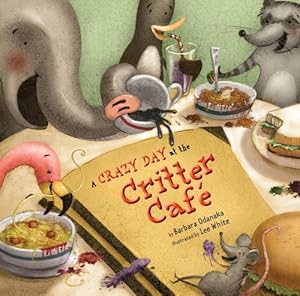
I use A Crazy Day at the Critter Cafe by Barbara Odanaka when I am introducing Daily 5 and CAFE. It's just a fun book when we start talking about the CAFE reading strategies.
How I Spent My Summer Vacation by Mark Teague is a fun tall-tale about a boy and his summer adventures. It is also a great book to jump start your first writing assignment for the year-have students write their own tall-tale vacation stories!

Nothing builds a classroom community like bucket-filling! How Full is Your Bucket? For Kids teaches kids how their words and actions affect others. I didn't read this or do bucket-filling last year, but I will definitely be starting right off the bat this year!
Make sure you go check out all the other awesome back to school picture books and link up with
Sunday, January 1, 2012
A New Year-Re-Launching Daily 5!

I hope 2011 has left everyone with great memories and 2012 will provide us with many more. On this New Year's Day, I have sat down to do lesson plans. Yes, reality has hit me that I do go back to school on Tuesday. I have avoided anything that resembles school work like the plague since I left on the 20th. Well, that's not true. I have been reading. A lot. I read Harry Potter and the Prisoner of Azkaban, The Unwanteds, started reading Harry Potter and the Goblet of Fire, and am listening to a book called Ghetto Cowboy. Reviews & recommendations on The Unwanteds and Ghetto Cowboy coming soon!
Anyone who started Daily 5 at the beginning of the school year may have seen some of those awesome behaviors start to slack off right before winter break. I certainly did. Returning from a long break, it is extremely important to do a re-launch of Daily 5. I am dedicating the entire week to it. Just as it's important to take your time during the initial launch, it is soooo worth it in the long run to take your time when relaunching after a break.
Here is what my re-launch will look like:
Each day is dedicated to a different Daily 5 choice. We don't do Listen to Reading.
Day One-Review good fit books. Do a mini-lesson using weights. Give time to make book choices and checking that books are a good fit. Review the Read to Self I-Chart, practice check for understanding and 3 ways to read a book. Correct & incorrect model and practice building stamina for read to self.
Day Two-Work on Writing. The first mini-lesson will be a review of the weekly journals students are expected to turn in. This is their first priority when working on writing. Review Work on Writing I-Chart, Correct & Incorrect model, and practice building stamina. The second mini-lesson we will review, modify, add to our ideas of things to write about. Students will record the list and keep in their notebooks.
Day Three-Read to Someone. We will review the I-Chart, EEKK, Checking for Understanding, and How to Choose a Partner. We will then correct & incorrect model, then practice building stamina.
Day Four-Word Work. Review the I-Chart and their word work packets, which is their first priority when they choose word work. We will then review & discuss other word work activities and materials.
How are other classrooms doing with Daily 5 this year? I would love for you to comment!
Sunday, August 7, 2011
Launching Daily 5: Model & Incorrect Model
Something that probably gets overlooked (and really shouldn't) when launching Daily 5 is the model and incorrect model. Not only is this the most entertaining part of the day, it is also very important to the success of your Daily 5 classroom.
After creating your Anchor Charts with your students, you will want to choose a student or two to model what the daily would look like. For instance, if you are launching Read to Self, you would want to choose a student to model how to pick a spot, open their book and get started right away, staying in one spot, reading quietly, and working on their stamina. Signal for the student to finish, then chat with your class about all the things they saw the student doing right. Next, comes the fun part. Tell the class you need a volunteer to show the class the wrong way to Read to Self (or whatever daily you are practicing). The hands will shoot up. I recommend choosing a student that you think might have some trouble during Daily 5. Not only will it give this student a little bit of much-needed attention, they will also do a pretty good job of incorrect modeling. I will say it is usually pretty funny when these students act out. The class will get a good laugh in. But, when you signal for the student to return to the meeting area, recognize that while the incorrect model was funny, it was incorrect. Talk about all the things they saw the student doing wrong and talk about what should have been done instead. I recommend doing another correct model before sending the students out to practice. You want them to leave with the correct way to do things in their heads, rather than the incorrect way. I also recommend you doing the correct & incorrect models during the first few days of the launch, and anytime throughout the year that you notice students are getting off track (particularly after long holiday breaks).
Thank you all for your kind words regarding my Daily 5 & CAFE series. Please continue to comment and e-mail me your questions!
After creating your Anchor Charts with your students, you will want to choose a student or two to model what the daily would look like. For instance, if you are launching Read to Self, you would want to choose a student to model how to pick a spot, open their book and get started right away, staying in one spot, reading quietly, and working on their stamina. Signal for the student to finish, then chat with your class about all the things they saw the student doing right. Next, comes the fun part. Tell the class you need a volunteer to show the class the wrong way to Read to Self (or whatever daily you are practicing). The hands will shoot up. I recommend choosing a student that you think might have some trouble during Daily 5. Not only will it give this student a little bit of much-needed attention, they will also do a pretty good job of incorrect modeling. I will say it is usually pretty funny when these students act out. The class will get a good laugh in. But, when you signal for the student to return to the meeting area, recognize that while the incorrect model was funny, it was incorrect. Talk about all the things they saw the student doing wrong and talk about what should have been done instead. I recommend doing another correct model before sending the students out to practice. You want them to leave with the correct way to do things in their heads, rather than the incorrect way. I also recommend you doing the correct & incorrect models during the first few days of the launch, and anytime throughout the year that you notice students are getting off track (particularly after long holiday breaks).
Thank you all for your kind words regarding my Daily 5 & CAFE series. Please continue to comment and e-mail me your questions!
Friday, August 5, 2011
Daily 5 Q&A
Some of my great followers and fellow bloggers have been asking me some questions about Daily 5 & CAFE and I wanted to dedicate today's post to answering them. I am so happy to see that so many people are trying out Daily 5 & CAFE in their classrooms this year. I truly believe literacy education should be heading in this direction and away from pre-packaged, one-size-fits-all basal series. As a member of my district's reading committee, I know I will fight tooth and nail to keep this workshop approach to reading.
Ok. I'm off my soapbox now. On to the questions...
1. Do you follow a set implementation schedule with your kids or do you follow the one laid out by the sisters?
2. How do you teach your 4th graders to read the pictures, and how is this differerent from teaching the younger kids?
I don't think actually teaching the fourth graders to read the pictures is different from teaching the younger kids, but the outcome is different. Typically for younger students (Kindergarten & 1st grade especially) reading the pictures is reading the book. I'm even teaching my two year old to read the pictures in his books. To the older students, reading the pictures should aide in accuracy and comprehension. Students should use the pictures to make sure the words they are reading and what they are understanding make sense.
3. I am wondering what kind of writing activities do you have your 4th graders do?
At the beginning of the year, when launching Work on Writing my students brainstorm topics they can write about during their writing choice. This anchor chart is kept up in my classroom all year for them to refer back to if they are ever stuck. I am also going to try to implement some Six Traits writing this year. Our building bought each grade level one of the Six Traits kits from Scholastic and I have been looking over it this summer. We also have building wide writing activities for each month. I may also have students write their readers responses during this time as well. Work on Writing is the only writing workshop time my students have built into the day. I will admit that with writing not being a tested subject, it has fallen to the wayside quite a bit.
4. How many rotations of Daily 5 do you do?
First, I don't think I have mentioned that I do not launch Listen to Reading. We do not have enough time, and I feel my students get what they need from listening to me read aloud and Read to Someone. During the last two years, I was only able to have two daily rotations. This worked out fine, the only rules I had were you could not do the same choice twice in a row, and you could only read to someone twice in a week. With my new schedule, it looks like we will have time to do three rotations a day (YAY!!)
5. I had a question about the beginning assessment that you give the students before starting CAFE. Is there a certain assessment that you use to help you encompass comprehension, accuracy, fluency and vocabulary?
In the past, we have used the STAR test for our reading assessments. This did not offer me any information other than the students' reading levels (which, in my opinion, were not very accurate). This year, we are using the Gates McGinitie assessment. From what I have been told, this assessment does offer insightful information about comprehension and vocabulary. We are receiving training on this at our PD in two weeks. What I have done in the past, and what I will continue to do, is gauge this during my individual conferences with students. I usually have them read a page or two, check for comprehension and their ability to use context clues on unknown words and take it from there. While I do have students that have goals in all four areas, I will say most of my students end up with comprehension and vocabulary goals.
I hope that this helped answer some of your questions! Please feel free to comment or e-mail me if you have more!
Ok. I'm off my soapbox now. On to the questions...
1. Do you follow a set implementation schedule with your kids or do you follow the one laid out by the sisters?
After two years of doing Daily 5 and one full year of CAFE, I have modified the implementation schedule given by the Sisters to fit my students and my needs. I anticipate this changing this year as well, because all students in my building did Daily 5 last year. I would like to think their stamina is higher than 5 minutes. I always start Daily 5 on the first day of school. I always teach the anchor lessons, such as I-PICK good fit books, three ways to read a book, coaching or time, ways to read to someone, etc. These are all very important lessons that will increase your students' success in Daily 5.
2. How do you teach your 4th graders to read the pictures, and how is this differerent from teaching the younger kids?
I don't think actually teaching the fourth graders to read the pictures is different from teaching the younger kids, but the outcome is different. Typically for younger students (Kindergarten & 1st grade especially) reading the pictures is reading the book. I'm even teaching my two year old to read the pictures in his books. To the older students, reading the pictures should aide in accuracy and comprehension. Students should use the pictures to make sure the words they are reading and what they are understanding make sense.
3. I am wondering what kind of writing activities do you have your 4th graders do?
At the beginning of the year, when launching Work on Writing my students brainstorm topics they can write about during their writing choice. This anchor chart is kept up in my classroom all year for them to refer back to if they are ever stuck. I am also going to try to implement some Six Traits writing this year. Our building bought each grade level one of the Six Traits kits from Scholastic and I have been looking over it this summer. We also have building wide writing activities for each month. I may also have students write their readers responses during this time as well. Work on Writing is the only writing workshop time my students have built into the day. I will admit that with writing not being a tested subject, it has fallen to the wayside quite a bit.
4. How many rotations of Daily 5 do you do?
First, I don't think I have mentioned that I do not launch Listen to Reading. We do not have enough time, and I feel my students get what they need from listening to me read aloud and Read to Someone. During the last two years, I was only able to have two daily rotations. This worked out fine, the only rules I had were you could not do the same choice twice in a row, and you could only read to someone twice in a week. With my new schedule, it looks like we will have time to do three rotations a day (YAY!!)
5. I had a question about the beginning assessment that you give the students before starting CAFE. Is there a certain assessment that you use to help you encompass comprehension, accuracy, fluency and vocabulary?
In the past, we have used the STAR test for our reading assessments. This did not offer me any information other than the students' reading levels (which, in my opinion, were not very accurate). This year, we are using the Gates McGinitie assessment. From what I have been told, this assessment does offer insightful information about comprehension and vocabulary. We are receiving training on this at our PD in two weeks. What I have done in the past, and what I will continue to do, is gauge this during my individual conferences with students. I usually have them read a page or two, check for comprehension and their ability to use context clues on unknown words and take it from there. While I do have students that have goals in all four areas, I will say most of my students end up with comprehension and vocabulary goals.
I hope that this helped answer some of your questions! Please feel free to comment or e-mail me if you have more!
Thursday, August 4, 2011
Daily 5: Anchor Charts & Focus Lessons
I'm going to put off my Book Talk Thursday this week to continue my Daily 5 & CAFE series. I was having a really hard time with the motivation to write about the Daily 5 & CAFE not being in school, but try and stop me now that I've started! Yesterday, I blogged about Launching Daily 5 & CAFE. Today I want to talk a little about anchor charts (or as the Sisters call them "I-Charts") and focus lessons for the first few weeks of school.
Anchor Charts/I-Charts-I feel very strongly that these charts need to be made with your students. I have seen a lot of really cute posters floating around on Pinterest and the blogs, but these charts must be meaningful to your students. Just as the Sisters suggest in their books, your students need to be the ones coming up with the ideas for these charts. Students are very easily guided in the right direction. Are my charts a little messy? Yes. Do I write things down, then cross them out? Yes. This is especially true when we write down what the teacher is doing during Daily 5. I love it when the students say the teacher is grading papers and I always write it down. After talking about the purpose of Daily 5, we cross it out, then write 'working with students'. After the second anchor chart, students catch on that everything is pretty much the same, no matter what Daily choice it is. Please, try to avoid the cutesy Daily 5 posters and make these charts with your students!
Focus Lessons-I posted yesterday about waiting to start your CAFE lessons until students have the Daily 5 under their belts for a few weeks. This is to not overwhelm your students. I reiterate, this is not to say you're not demonstrating these strategies, you are just not giving the students one more thing to remember while they are learning how to be independent during the Daily 5. I start Daily 5 on the first day of school. Why not? This will set the tone for the whole year and teach your students that reading and becoming independent readers is important. The first focus lesson I teach is "Three Ways to Read a Book." Yes, I even teach my fourth graders how to read the pictures. Reading the pictures to fourth graders is a little bit different than first graders, but it is still very important because it aides in comprehension. In addition to the lessons involved with launching each daily round, you will want to teach focus lessons on where to sit in the room, choosing good fit books, what to write about, word work materials and how to use them, modeling & practice choosing partners for Read to Someone, the different ways to Read to Someone, coaching, etc. Do you see why I don't start launching the CAFE menu right away? You will know when the time is right to launch the CAFE menu in your classroom.
Please, let me know if there are any specific Daily 5/CAFE topics you would like me to discuss in this series!
Anchor Charts/I-Charts-I feel very strongly that these charts need to be made with your students. I have seen a lot of really cute posters floating around on Pinterest and the blogs, but these charts must be meaningful to your students. Just as the Sisters suggest in their books, your students need to be the ones coming up with the ideas for these charts. Students are very easily guided in the right direction. Are my charts a little messy? Yes. Do I write things down, then cross them out? Yes. This is especially true when we write down what the teacher is doing during Daily 5. I love it when the students say the teacher is grading papers and I always write it down. After talking about the purpose of Daily 5, we cross it out, then write 'working with students'. After the second anchor chart, students catch on that everything is pretty much the same, no matter what Daily choice it is. Please, try to avoid the cutesy Daily 5 posters and make these charts with your students!
Please, let me know if there are any specific Daily 5/CAFE topics you would like me to discuss in this series!
Wednesday, August 3, 2011
Launching Daily 5 & CAFE
If you've been reading my blog for a while, then you know that I am a HUGE advocate for the Daily 5 & CAFE. I have done Daily 5 in my classroom for two years and CAFE for 1 1/2. I had planned on posting a lot about both throughout the summer, but I have to admit, I was having some difficulty finding the inspiration without being in school. As summer is winding down and I am beginning to get things in order for the new school year, I am starting to revisit my lesson plans for launching Daily 5.
To me, it only makes sense to launch Daily 5 and CAFE at the same time. At our school retreat last week it was discussed whether we should start on day one or wait a couple of weeks. For me and most of my co-workers, it is better to wait a couple of weeks before we actually start launching the CAFE menu. Actually, the only people that were in somewhat of a disagreement (that's really not even the word for it-more of a questioning) were non-classroom teachers (reading specialists familiar with Daily 5 & CAFE, but not practicing it in a classroom full of 30 students). The reason why I wait is because it takes A LOT of work to get the Daily 5 up and running. There is a lot of background that needs to go into Daily 5, more than just modeling and practicing the different dailies. Does this mean you are not reading aloud and demonstrating the CAFE strategies? Of course not. I'm sure all of us subconsciously model CAFE strategies every single time we read, because that is what good readers and good teachers do. I just don't introduce the CAFE menu until students have Daily 5 under their belts. We don't want to overwhelm the students. Can you imagine everything students need to remember? We don't want them to be so nervous trying to remember to stay in one spot, get started right away, read quietly & the whole time AND on top of that checking for understanding. In my opinion, it's just too much at once. Let them get started practicing the different dailies, then work in the CAFE strategies in a few weeks.
Your focus lessons the first week or two should involve how to complete the dailies successfully. You will spend A LOT of time practicing and building stamina. DO NOT overlook this part! Your students' success & your success the rest of the year depends on this step. You cannot ignore one student's misgivings. As annoying as it may be, you must signal for all students to stop the minute you see a student off task. Call them back to your meeting area and talk about the types of behaviors you were seeing. Some students may have been off task and didn't even realize it. Do you need to single students out? Absolutely not, generalize the behaviors. But, if you notice it is continually the same student, you might want to call them off to the side and talk to them privately. You may need to set Daily 5 behavior goals with this student right away.
I think I've talked long enough for today. Tomorrow-Anchor Charts & Focus Lessons!
To me, it only makes sense to launch Daily 5 and CAFE at the same time. At our school retreat last week it was discussed whether we should start on day one or wait a couple of weeks. For me and most of my co-workers, it is better to wait a couple of weeks before we actually start launching the CAFE menu. Actually, the only people that were in somewhat of a disagreement (that's really not even the word for it-more of a questioning) were non-classroom teachers (reading specialists familiar with Daily 5 & CAFE, but not practicing it in a classroom full of 30 students). The reason why I wait is because it takes A LOT of work to get the Daily 5 up and running. There is a lot of background that needs to go into Daily 5, more than just modeling and practicing the different dailies. Does this mean you are not reading aloud and demonstrating the CAFE strategies? Of course not. I'm sure all of us subconsciously model CAFE strategies every single time we read, because that is what good readers and good teachers do. I just don't introduce the CAFE menu until students have Daily 5 under their belts. We don't want to overwhelm the students. Can you imagine everything students need to remember? We don't want them to be so nervous trying to remember to stay in one spot, get started right away, read quietly & the whole time AND on top of that checking for understanding. In my opinion, it's just too much at once. Let them get started practicing the different dailies, then work in the CAFE strategies in a few weeks.
Your focus lessons the first week or two should involve how to complete the dailies successfully. You will spend A LOT of time practicing and building stamina. DO NOT overlook this part! Your students' success & your success the rest of the year depends on this step. You cannot ignore one student's misgivings. As annoying as it may be, you must signal for all students to stop the minute you see a student off task. Call them back to your meeting area and talk about the types of behaviors you were seeing. Some students may have been off task and didn't even realize it. Do you need to single students out? Absolutely not, generalize the behaviors. But, if you notice it is continually the same student, you might want to call them off to the side and talk to them privately. You may need to set Daily 5 behavior goals with this student right away.
I think I've talked long enough for today. Tomorrow-Anchor Charts & Focus Lessons!
Let's Try This Again...CAFE Posters!
Sorry about the confusion with the posters! I'm not sure what the problem is, so I'm going to try it again. My PrintMaster program will only export files in jpeg, and individually. I can't group them together, which is a big pain in the you know what! Since you all couldn't download my posters, I transferred them all to PDF. Of course, they are still all individual files, which drives me crazy! I wish I could package them together. I welcome any suggestions on how to do this. So..since I'm a bit more computer illiterate than I thought, here are the links to the posters through google docs. You have to click on each individual link for each poster. I'm so sorry!
Comprehension http://bit.ly/q7jrtI
Accuracy http://bit.ly/pupNvY
Fluency http://bit.ly/nWxveB
Expand Vocabulary http://bit.ly/qNKcns
Comprehension http://bit.ly/q7jrtI
Accuracy http://bit.ly/pupNvY
Fluency http://bit.ly/nWxveB
Expand Vocabulary http://bit.ly/qNKcns
Monday, April 18, 2011
My Current Obsession
I seem to get fixated on things often. When I find something that I totally L-O-V-E, I become obsessed. It's all I talk about, read about, and web-surf about. This is my current obsession. Actually, as you'll find out it's been my obsession for the last two years. That's how much I really love it.
The Daily 5 and CAFE.


For those of you that have been hiding under a rock the past two years, The Daily Five, and it's accompaniment The CAFE Book, are written by "The Sisters," Gail Boushey and Joan Moser. These two books have completely revolutionized the way I teach reading. I read The Daily Five book two years ago on Spring Break and decided that I MUST implement it in my classroom. Unbeknownst to me, two other teachers in my building read it over the summer and we decided we would create a book club and share ideas. We eventually started reading The CAFE Book, and the three of us implemented the CAFE reading strategies during the second half of last school year. On the urging of our School Literacy Consultant and building Principal, the entire building implemented The Daily Five this year. I was so proud of our building for taking on such a task and following through. We all very strongly believe that The Daily 5 and CAFE will help our students become better readers, writers, and spellers.
The amount of reading and writing that gets done during our Daily 5 time is phenomenal. My students are using words like "schema" and "stamina." They are translating their reading strategies to practice OAA tests and content-area reading. It's amazing.
I strongly encourage you to visit The Sisters website at www.thedailycafe.com or pick up the books for some VERY light reading. I'm not being sarcastic. Both books can be read in a weekend, and I promise you, you will quickly become obsessed as I.
Subscribe to:
Posts (Atom)