Saturday, August 10, 2013


Sunday, August 4, 2013
Thoughts on Classroom Arrangements
I am still on vacation, but I'm reading Twitter, following blogs, and pinning away. It seems as though I'm the only teacher on the planet not in the classroom preparing for the new school year. This is my second vacation this summer. We did the two-vacation thing last year and I loved it. We took a larger-scale family vacay in June, then a smaller "end-of-summer celebration vacation" if you will in August. It was actually a surprise trip from my family for my big 3-0, but it was a great way to say goodbye to summer. I loved it so much, I decided to try it again this summer. The kid and I accompanied my husband on a business trip to Atlanta, then hopped on a plane to see my sister and her husband in Orlando. We hadn't seen them since the surprise trip last August, so we were really looking forward to it. I'm going to blog about both trips with pictures when I return home.
What I want to write about today is different classroom arrangements. I got rid of my desk last year. I was really worried I would miss it, but I really didn't. I never sat at my desk during class anyways, so I just used my kidney table as a "desk," which I only sit at in the morning during check-in and during small groups. I also brought in another kidney table for my co-teacher. She spent most of the afternoon reading block in my classroom, so she really needed a space of her own. I wish I had pictures, but essentially both kidney tables were in the back of the room, along with our library area. I would like to move things around this year, here are some thoughts:
General Classroom Layout:
I've always wanted my small group area in front of the Smart Board. It makes sense to be able to make charts, hop on the Internet, or display something necessary for a read aloud or lesson. My biggest concern with that, though, is that creating this space in front of the board takes away space for desks when I want students to learn from there and see the Smart Board. I also saw an arrangement where the teacher moved her small group table to the center of the room. I really liked that idea (again, to be able to utilize the Smart Board during small groups, and also it seems like it might be better to monitor behaviors during Daily 5 and math workshop.
Library Area:
I've always loved the library area in my classroom. I have three long bookshelves full of books and one tall bookcase I brought from home. I bought paper lanterns at Target this summer to hang in the library area for softer lighting. I like students to be able to sit in the library to read and relax. In the past, I've also used this space as a meeting area. My biggest problem with my library last year is that some of my students chose to sit there and goof around while I was with a small group and couldn't see them. My first thought is to not make my library so "closed off" but my gut tells me this could happen no matter where my library is in the room. I also need to think about if I want to maintain the library as my meeting area. If not, I can have it be a smaller area in the room.
Computer Area:
I have three desktop computers provided by the district in my classroom. They have to be against the wall in my classroom because of wall outlets and Internet connections. I also have three Google Chromebook computers that I got through Donor's Choose last Christmas. The Chromebooks are more mobile, but I like them to be plugged in throughout the day when not in use. Last year, I had another table that formed "L" next to the desktop computers. I think I like the idea of all of the computers being in the same location, but they don't have to be. Hmm...now that's got me thinking!!
Your thoughts??
How are you arranging your classroom this year? Do you change your layout each year or essentially keep it the same? Anyone else remove their teacher desk from the room?
Well, off I go to look at more classroom layouts on the 'net!
Thursday, August 1, 2013
Book Talk Thursday-The False Prince
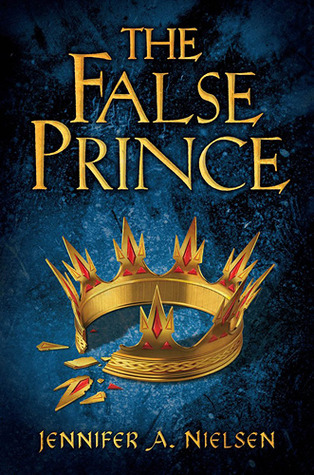
If you have not read this book yet, RUN, don't walk to your nearest bookstore and pick it up. I say bookstore because it's so good I imagine there will be a LONNGG wait list at the library. Would you believe me if I say this is more than likely the best fantasy book I have read since The Hunger Games? I know, The Hunger Games isn't technically fantasy...but I think you get the idea. It is really, really, really good!
Ok...on to the synopsis.
Sage is an orphan in the kingdom of Avenia. You can tell right away that he gets into a lot of trouble, but it always seems like it is for the greater good. A wealthy man buys Sage from the orphanage and Sage quickly realizes this man has a purpose. There are three other boys with him that were also orphans and they all somewhat look alike. The man tells the boys right off the bat that he is looking for a boy that will replace the prince of Carthya, who was thought dead four years ago when his ship was overtaken by pirates. He wants the prince to become king so that he will be able to rule Carthya from the background. Sage and the other boys are taken to the man's home in Farthenwood to train and become The False Prince.
Right away, you will fall in love with Sage. He is feisty, but you can tell has a good heart. I like his spunk and his attitude. The character development in this book is amazing. You will also find some twists and turns in this book. I predict a lot when I'm reading, and I'm often right, which sometimes ruins the book for me. I did not predict a few plot twists, which made me love the book that much more!
The chapters in this book are also very short, which I think makes the book great for a read-aloud. After I gushed and gushed about this book for a few days, my husband very quietly snuck it into his carry-on so he could take it on his next business trip to read!
And guess what? This book is the first in a TRILOGY! Yay! The Runaway King is already out (and I am currently reading it!) and the third book, The Shadow Throne is due out March 1, 2014. Also, I was checking out Jennifer Nielsen's website and it looks like The False Prince has been optioned by Paramount Pictures!! Go read this book RIGHT NOW!
Tuesday, July 30, 2013
Your Daily 5 Questions...My Answers (Part Two)
Yesterday I posted part one of the questions fellow teachers have been e-mailing me regarding Daily 5. Today is part two!
I'm a 4th grade reading/language arts teacher. I want to use the Daily Five/cafe format this year, but I have some questions. I'm required to take 2 grades per week for reading, grammar, and spelling. What do you take grades on? Also, do you use basals or chapter books during your comprehension lessons?
One of the hardest things I struggled with when I first started Daily 5 & CAFE was grades. I went from a ton of grades each week (from silly busy work) to nothing! Luckily, I am not required to take two per week, but I might have a solution for you. I do take an effort grade. We did Marzano training a few years ago, and one of the strategies is effort. Together with my students, we create an effort rubric. It is very simple 4,3,2,1 where 4=100%, 3=75%, and so forth. At the end of each Daily 5 round, I call students' names and have them give me their effort. For the most part, students are pretty honest about their effort. If I suspect a student of inflating their effort, I choose to watch them closely during the next round. I typically pick out 4-5 students each round to really watch (while I'm doing groups) to see if their effort is what it should be. I tally the effort grades at the end of each week and average them for my grade book. Daily 5 effort accounts for 10% of the total reading grade in my grade book. I also do weekly reading response journals (modeled after the letters Donalyn Miller discusses in The Book Whisperer). My district has one grade for reading, writing, and spelling, so the reading response journals account for 25% of the grade. You could also have students turn in their weekly word work for a grade. My students have to complete a SAW (Sort, Alphabetize, Write sentences) during their word work each week.
How many students do you teach?
In the past, I have taught my homeroom and my teaching partner's homeroom reading, language arts, and spelling. There were 30 students (give or take a few) in each class. My reading block for each class was about 2 hours and 15 minutes long. This year, however, I have chosen to stay self-contained and see what that is like!
Does each of your students have a book box in your classroom?
My students do not have book boxes because I do not have room for storage. Plus, I wanted my students to be able to take their books to their other class. I used reusable grocery bags for a few years, where students were supposed to store their books, journal, and reading binder, but I was finding it was also becoming a trash can. I took those away, then went to gallon ziploc bags. Eventually, I just gave everything up and expected my fourth graders to be responsible and bring everything with them that they needed to my class. This year, being self-contained, I'm going to try book boxes if my school will order them for me.
Do you teach anther subject with reading? We will teach social studies and reading.
My district recently adopted Good Habits, Great Readers as a series. I do not use it religiously, but I do use the guided reading books and lessons as part of my strategy groups. This series is strategy-based, so it does fit somewhat nicely with Daily 5. I am very anti-basal. Prior to this adoption, I did not even have basals in my classroom. I created lessons based on the strategies/standards I was teaching.
The first year I switched with my teaching partner, I taught reading, writing, spelling, and social studies. She only taught math and science, though, so it was a little uneven. We eventually made it so I taught reading, writing, and spelling while she taught math, science, and social studies. She only did science and social studies on alternating days, however.
I'm a 4th grade reading/language arts teacher. I want to use the Daily Five/cafe format this year, but I have some questions. I'm required to take 2 grades per week for reading, grammar, and spelling. What do you take grades on? Also, do you use basals or chapter books during your comprehension lessons?
One of the hardest things I struggled with when I first started Daily 5 & CAFE was grades. I went from a ton of grades each week (from silly busy work) to nothing! Luckily, I am not required to take two per week, but I might have a solution for you. I do take an effort grade. We did Marzano training a few years ago, and one of the strategies is effort. Together with my students, we create an effort rubric. It is very simple 4,3,2,1 where 4=100%, 3=75%, and so forth. At the end of each Daily 5 round, I call students' names and have them give me their effort. For the most part, students are pretty honest about their effort. If I suspect a student of inflating their effort, I choose to watch them closely during the next round. I typically pick out 4-5 students each round to really watch (while I'm doing groups) to see if their effort is what it should be. I tally the effort grades at the end of each week and average them for my grade book. Daily 5 effort accounts for 10% of the total reading grade in my grade book. I also do weekly reading response journals (modeled after the letters Donalyn Miller discusses in The Book Whisperer). My district has one grade for reading, writing, and spelling, so the reading response journals account for 25% of the grade. You could also have students turn in their weekly word work for a grade. My students have to complete a SAW (Sort, Alphabetize, Write sentences) during their word work each week.
How many students do you teach?
In the past, I have taught my homeroom and my teaching partner's homeroom reading, language arts, and spelling. There were 30 students (give or take a few) in each class. My reading block for each class was about 2 hours and 15 minutes long. This year, however, I have chosen to stay self-contained and see what that is like!
Does each of your students have a book box in your classroom?
My students do not have book boxes because I do not have room for storage. Plus, I wanted my students to be able to take their books to their other class. I used reusable grocery bags for a few years, where students were supposed to store their books, journal, and reading binder, but I was finding it was also becoming a trash can. I took those away, then went to gallon ziploc bags. Eventually, I just gave everything up and expected my fourth graders to be responsible and bring everything with them that they needed to my class. This year, being self-contained, I'm going to try book boxes if my school will order them for me.
Do you teach anther subject with reading? We will teach social studies and reading.
My district recently adopted Good Habits, Great Readers as a series. I do not use it religiously, but I do use the guided reading books and lessons as part of my strategy groups. This series is strategy-based, so it does fit somewhat nicely with Daily 5. I am very anti-basal. Prior to this adoption, I did not even have basals in my classroom. I created lessons based on the strategies/standards I was teaching.
The first year I switched with my teaching partner, I taught reading, writing, spelling, and social studies. She only taught math and science, though, so it was a little uneven. We eventually made it so I taught reading, writing, and spelling while she taught math, science, and social studies. She only did science and social studies on alternating days, however.
Saturday, July 27, 2013
Your Daily 5 Questions...My Answers
I'm on vacation this week, but I am scheduling some posts so I don't leave you all lonely! I have recently been e-mailed by several people asking questions about Daily 5. As I was answering each one, I thought that I should create a blog post about this because if one person is asking, there might be five more wondering. So here goes...Questions are in bold, my answers follow.
My thoughts are that I want to do both- the Daily 5 (or daily 3) AND reading workshop. Do you do that in your classroom?
The Daily Five and The Book Whisperer are excellent books. Those are definitely my go-to books for reading framework and instruction. I'm not sure exactly what you mean when you say Daily 5 and reading workshop, in my mind, they are essentially the same thing. Have you read The CAFE Book, also by the Sisters? It is the "instruction" piece to Daily 5.
I was wondering how your day goes.
I have a two hour block for reading that consists of two 20 minute lessons (or one long 40 minute lesson, for new material), and three Daily 5 choices. During the Daily 5 choices, I pull small groups for instruction. Sometimes the small groups are strategy based, but more recently I have done strategy-based guided reading. My district has Good Habits Great Readers, and although I don't use the series exactly as it is intended, I do like how the guided reading books and lessons are strategy based. It fits very nicely with CAFE.
How would you break down a 1 hour block for daily 5?
I don't know if Daily 5 is the best option for you if you only have one hour. I would think your "mini-lessons" would need to be a bit longer since you don't get to see your students that often. Maybe you could spend half the time in a whole-group lesson and the other half working with a small group. While you're with your small group, the rest of the class could be doing independent reading with a book of their choice. Have you read The Book Whisperer by Donalyn Miller? She offers a lot of great insight about reading instruction, and especially choice reading.
My thoughts are that I want to do both- the Daily 5 (or daily 3) AND reading workshop. Do you do that in your classroom?
The Daily Five and The Book Whisperer are excellent books. Those are definitely my go-to books for reading framework and instruction. I'm not sure exactly what you mean when you say Daily 5 and reading workshop, in my mind, they are essentially the same thing. Have you read The CAFE Book, also by the Sisters? It is the "instruction" piece to Daily 5.
I was wondering how your day goes.
I have a two hour block for reading that consists of two 20 minute lessons (or one long 40 minute lesson, for new material), and three Daily 5 choices. During the Daily 5 choices, I pull small groups for instruction. Sometimes the small groups are strategy based, but more recently I have done strategy-based guided reading. My district has Good Habits Great Readers, and although I don't use the series exactly as it is intended, I do like how the guided reading books and lessons are strategy based. It fits very nicely with CAFE.
How would you break down a 1 hour block for daily 5?
I don't know if Daily 5 is the best option for you if you only have one hour. I would think your "mini-lessons" would need to be a bit longer since you don't get to see your students that often. Maybe you could spend half the time in a whole-group lesson and the other half working with a small group. While you're with your small group, the rest of the class could be doing independent reading with a book of their choice. Have you read The Book Whisperer by Donalyn Miller? She offers a lot of great insight about reading instruction, and especially choice reading.
Tuesday, July 16, 2013
#nErDcampBC Breakdown
Last week I posted how excited I was about the first-ever nErDcamp, hosted by the Nerdy Book Club. It did not disappoint. In fact, is was one of the best PD opportunities that I have ever attended. For those of you who don't know, an Edcamp is an "unconference" of sorts. 1.) They are free. 2.) Conference attendees create and run the sessions. 3.) They are fun!
My colleague and I arrived in Battle Creek, Michigan on Wednesday night, after what turned into about a 6-hour drive because of weather and traffic. After grabbing dinner and drinks, we hit the hay at the Holiday Inn, Battle Creek because it was going to be an early morning. We grabbed a quick breakfast at the hotel restaurant-free, thanks to my husband's Platinum Priority Club status, and headed to Lakeview High School, the site of nErDcamp. The first 150 people who arrived were greeted with swag bags, full of ARCs and posters! Awesome! We headed into the "Black Box," quite literally a black, square room possibly used for theatre or band. The room was set up with tables, a screen and projector, and several books for people to explore that would be given away later. After giving everyone time to settle in, Colby and Alaina Sharp, nErDcamp organizers-extraordinaires, told us how the day was going to work. When asked, very few people in the room said they had been to an Edcamp before. This was a new experience for most attendees!
The day had four sessions-two morning, two afternoon, with a lunch break in-between. After a welcome and brief overview of how things were going to work, we were set off to begin discussing what kinds of sessions we would like to see. I felt so inferior to so many people in that room, that I mostly sat and watched, in awe. Colby Sharp, Donalyn Miller, Franki Sibberson, Jillian Heise, among MANY others-all people whom I look up to as a reading teacher. Sessions started forming. Alaina put session titles into an "Idea Board" Google Doc, to which everyone had access. Sessions brainstormed included "Everything Evernote," "Flipping 101," "Twitter 101," "Book Talks," "Skyping and Connecting with Authors," etc. Twelve possible sessions into two one-hour time blocks. How's a girl to choose?! Let me tell you, it was difficult. I chose to go to "Everything Evernote," hosted by Cathy Mere, Karen Terlecky, and Alaina Sharp. I used Evernote in my classroom last year, and I wanted to learn more about it's possibilities. Wow! That's another post for another day. The second session I chose to attend was "Motivating Reading and Writing Through Technology" with Donalyn Miller and Suz Gibbs. The cool thing about Edcamps are, even though there are session leaders, everyone is encouraged to participate and give input. Some things I took away from that session is Biblionasium, a site for students to record their books, and Booksource, a way to catalog your books digitally. Book trailers, Prezi, and Edmodo were other things discussed at this session. Suz Gibbs also showed an amazing book trailer created by one of her students!
After lunch, we went back to the "Black Box" to brainstorm ideas for the afternoon sessions. Once again, some wonderful ideas were offered. Sessions included "Graphic Novels," "Special Ed and Literacy," "Sister Classrooms," "Battle of the Books," "Genius Hour," "Nerdy Book Club Needs You," among others. For the afternoon I chose to attend "Sister Classrooms," hosted by Jillian Heise and Brian Wyzlick and "Genius Hour" with Amanda Ferrari. I was interested in Sister Classrooms for two reasons. One, I follow Jillian and Brian on Twitter and I am seeing their back-and-forth about things they are doing in their classrooms. Jillian lives in Wisconsin and Brian in Michigan. They have connected their classrooms in many ways. Another reason I was interested was because my colleague and I will be in different buildings next year, both teaching fourth grade. We want to connect our classrooms in this same way. When I get done writing this post, I am going to create a Google Doc for she and I to share ideas on ways to connect-one thing Jillian and Brian recommend. The final session I attended was "Genius Hour." Once again, I had heard about it on Twitter and wanted to learn more. Twitter is amazing PD people! The idea behind Genius Hour comes from Google, who allows their employees 20% of their time to work on something company-related that interests them personally. They believe that employees will be more productive when people work on something that they are passionate about. Genius Hour in the classroom is allowing your students 20% of their time to work on a project they care about. I really like this concept, and look forward to learning more.
The best thing about nErDcamp was the interactive idea board and notes taken at each session. If you click on each session number on the idea board, it links you to a notes page taken in the session! How cool is that?! So, if I have mentioned anything that sounds interesting to you, or you would like to read more about the different sessions offered, go to the idea board and get clicking!
I was so inspired by the number of teachers that attended nErDcamp. Everyone gave up a day from their summer vacation to learn and grow. Many traveled hundreds of miles to get there and I would be willing to bet that everyone said it was well worth it, it certainly was for me.
My colleague and I arrived in Battle Creek, Michigan on Wednesday night, after what turned into about a 6-hour drive because of weather and traffic. After grabbing dinner and drinks, we hit the hay at the Holiday Inn, Battle Creek because it was going to be an early morning. We grabbed a quick breakfast at the hotel restaurant-free, thanks to my husband's Platinum Priority Club status, and headed to Lakeview High School, the site of nErDcamp. The first 150 people who arrived were greeted with swag bags, full of ARCs and posters! Awesome! We headed into the "Black Box," quite literally a black, square room possibly used for theatre or band. The room was set up with tables, a screen and projector, and several books for people to explore that would be given away later. After giving everyone time to settle in, Colby and Alaina Sharp, nErDcamp organizers-extraordinaires, told us how the day was going to work. When asked, very few people in the room said they had been to an Edcamp before. This was a new experience for most attendees!
The day had four sessions-two morning, two afternoon, with a lunch break in-between. After a welcome and brief overview of how things were going to work, we were set off to begin discussing what kinds of sessions we would like to see. I felt so inferior to so many people in that room, that I mostly sat and watched, in awe. Colby Sharp, Donalyn Miller, Franki Sibberson, Jillian Heise, among MANY others-all people whom I look up to as a reading teacher. Sessions started forming. Alaina put session titles into an "Idea Board" Google Doc, to which everyone had access. Sessions brainstormed included "Everything Evernote," "Flipping 101," "Twitter 101," "Book Talks," "Skyping and Connecting with Authors," etc. Twelve possible sessions into two one-hour time blocks. How's a girl to choose?! Let me tell you, it was difficult. I chose to go to "Everything Evernote," hosted by Cathy Mere, Karen Terlecky, and Alaina Sharp. I used Evernote in my classroom last year, and I wanted to learn more about it's possibilities. Wow! That's another post for another day. The second session I chose to attend was "Motivating Reading and Writing Through Technology" with Donalyn Miller and Suz Gibbs. The cool thing about Edcamps are, even though there are session leaders, everyone is encouraged to participate and give input. Some things I took away from that session is Biblionasium, a site for students to record their books, and Booksource, a way to catalog your books digitally. Book trailers, Prezi, and Edmodo were other things discussed at this session. Suz Gibbs also showed an amazing book trailer created by one of her students!
After lunch, we went back to the "Black Box" to brainstorm ideas for the afternoon sessions. Once again, some wonderful ideas were offered. Sessions included "Graphic Novels," "Special Ed and Literacy," "Sister Classrooms," "Battle of the Books," "Genius Hour," "Nerdy Book Club Needs You," among others. For the afternoon I chose to attend "Sister Classrooms," hosted by Jillian Heise and Brian Wyzlick and "Genius Hour" with Amanda Ferrari. I was interested in Sister Classrooms for two reasons. One, I follow Jillian and Brian on Twitter and I am seeing their back-and-forth about things they are doing in their classrooms. Jillian lives in Wisconsin and Brian in Michigan. They have connected their classrooms in many ways. Another reason I was interested was because my colleague and I will be in different buildings next year, both teaching fourth grade. We want to connect our classrooms in this same way. When I get done writing this post, I am going to create a Google Doc for she and I to share ideas on ways to connect-one thing Jillian and Brian recommend. The final session I attended was "Genius Hour." Once again, I had heard about it on Twitter and wanted to learn more. Twitter is amazing PD people! The idea behind Genius Hour comes from Google, who allows their employees 20% of their time to work on something company-related that interests them personally. They believe that employees will be more productive when people work on something that they are passionate about. Genius Hour in the classroom is allowing your students 20% of their time to work on a project they care about. I really like this concept, and look forward to learning more.
The best thing about nErDcamp was the interactive idea board and notes taken at each session. If you click on each session number on the idea board, it links you to a notes page taken in the session! How cool is that?! So, if I have mentioned anything that sounds interesting to you, or you would like to read more about the different sessions offered, go to the idea board and get clicking!
I was so inspired by the number of teachers that attended nErDcamp. Everyone gave up a day from their summer vacation to learn and grow. Many traveled hundreds of miles to get there and I would be willing to bet that everyone said it was well worth it, it certainly was for me.
Monday, July 15, 2013
Thoughts on Abandoning Books
Have you seen this infographic on GoodReads recently?

My co-teacher sent it to me for a little laugh. We allow our students to abandon books. We know that every book is not right for every person. Our goal is to pair each student with their just-right book. Of course, we have those few students who abandon every single book they pick up. We call them "Book Abandoners." It's a term we use every day in our classroom, and the students know that we do not want them to become habitual book abandoners. This infographic was kind of a laugh for us, because we had a parent a few years ago that did not like that we told her son he was a book abandoner. Regardless of the fact that the child did not finish a book his entire fourth grade year. We wanted him to finish a book. We begged and pleaded with him. We allowed him to pick his own books. We gave him books we thought he would enjoy. He never finished one. That will haunt me for a long time.
I recently finished The Book Thief by Marcus Zusak. A non-teaching friend recommended it to me, which was huge because this friend rarely reads kid-lit or YA. She told me how much she loved it and how she had to slow her reading down because she just didn't want it to end. Great review, right? This same friend also recommended The Storyteller by Jodi Piccoult. I also read that book this summer and she did not steer me wrong. (Side note: What's with the Nazi books this summer? I also reread Number the Stars). The Book Thief had been on my GoodReads list since I started marking books to-read on the site. On this friend's recommendation, I decided to read it this summer. What the heck, right? I read two other Holocaust-era books, what's one more?
I struggled through it. No, I STRUGGLED through it. I don't know why. Maybe it was one too many Nazi/Holocaust books in such a short time period. It could be the fact that Death was the narrator in this book, obviously something very new to me. My go-to reading superstars on GoodReads & Twitter, Donalyn Miller and Colby Sharp both rated the book very highly. I kept wondering, "What is wrong with me? Why don't I like this book like the rest of the world does?" I still don't have an answer to that question. I will continue to ponder.
I thought about abandoning the book a few times. I allow my students to be book abandoners, why can't I? Then I kept telling myself, "Everyone else loved this book, there's got to be something I'm missing." I kept reading. In my eyes, the last 100 pages or so redeemed the entire book. It was so well-written and I felt so many emotions reading the end of the book. (No, the emotion was not happiness that it was almost over!). That got me thinking, should I allow book abandoning? Should I encourage my students to stick with it, because they might get something out of it in the end? I won't say I loved this book, by any means, but my entire perspective on the book changed now that I reached the end. Maybe this book wasn't just right for me at this time. I'm now curious, should I encourage students when they abandon books to go back and try it again at another point in the year?
One of the great things about being a teacher who reads is that I can reflect on my reading life and use it as a teaching tool in the classroom. I will definitely be sharing my struggle with this book with my students. First, they will learn that readers do sometimes feel conflicted with a book they are reading, dislike a book even. They will also learn that persevering through a book, rather than abandoning it, does have it's rewards. I felt accomplished finishing this book, as well as seeing the book in a whole new light once I had time to reflect. I learn, or take away something from every book I read. This time my lessons will carry on with my students.
Subscribe to:
Posts (Atom)